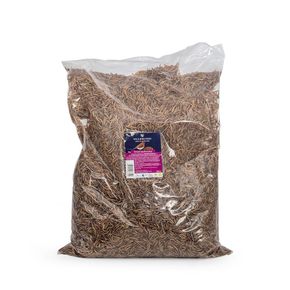
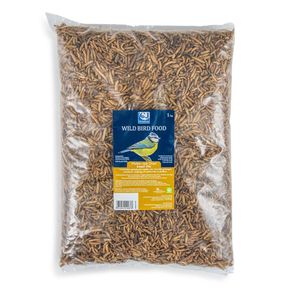
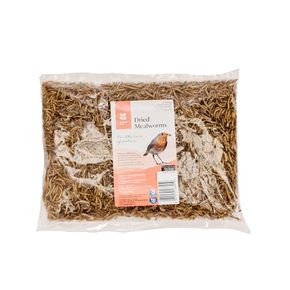
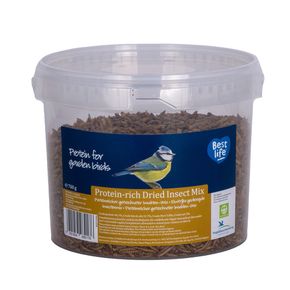
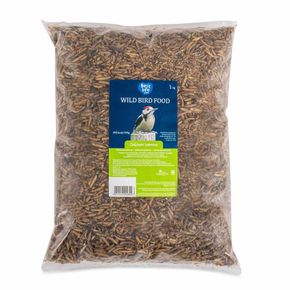
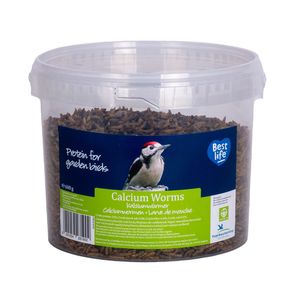
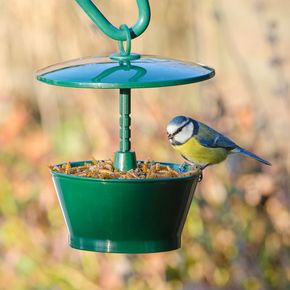
Insect populations in gardens are under continuous pressure, meaning our feathered friends can use all the extra support they can get. With a portion of dried mealworms, you provide robins, blue tits, blackbirds, and dozens of other species with exactly what they need, right in your own back garden.
Our protein-rich mealworms
Mealworms are the larvae of the mealworm beetle (Tenebrio molitor). They have been used for decades as a nutrient-rich food source for reptiles and garden birds alike, and for good reason: their nutritional profile is impressive. Raw mealworms consist of approximately 20% protein and 13% fat. This makes them an excellent energy source for birds that expend vast amounts of stamina, such as flying insectivores and breeding birds feeding their hungry chicks.
The mealworms you buy from CJ Wildlife are fully dried. During the drying process, moisture evaporates, while the vital proteins, fats, and minerals are carefully locked in. Dried mealworms are much easier to store, have a less intense odour than live ones, and are available all year round. This makes them the most practical and convenient choice for any garden bird enthusiast.
|
Feature
|
Dried Mealworms
|
Live Mealworms
|
|
Shelf Life
|
Months (stored dry)
|
Weeks (refrigerated)
|
|
Convenience
|
Ready to use instantly
|
Requires maintenance and ventilation
|
|
Nutritional Value (Protein)
|
High (concentrated)
|
High (includes moisture)
|
|
Attractiveness to Birds
|
High, especially once accustomed
|
Extremely high (movement attracts)
|
|
Odour
|
Hardly noticeable
|
Noticeable
|
Are you just starting out with bird feeding? Then dried mealworms are the ideal introduction: simple, effective, and completely hassle-free.
Which birds eat mealworms?
Almost all insect-eating garden birds are huge fans of mealworms. However, even species that are traditionally seed-eaters will eagerly snap them up. Below are the most common visitors you can attract to your garden with mealworms:
- Robins are well-known for their love of mealworms, particularly during the busy breeding season.
- Blue Tits and Great Tits are highly attracted to the dense protein content. Blackbirds and thrushes thoroughly enjoy mealworms as a natural supplement to their ground-feeding diet.
- Wrens and Dunnocks greatly appreciate the small size and easy digestibility of mealworms.
During the breeding season (March to August), the feeding behaviour of many birds changes noticeably. Even species that normally prefer seeds will actively search for protein-rich food to rear their young. Mealworms are a fantastic supplement during this time, as young chicks digest animal proteins much better than tough seeds.
Feeding mealworms: how to do it right?
Offering mealworms is easier than you think, but a few handy tips can make the difference between a garden that gets occasional visitors and one that is bustling with activity every day.
1. The right location
Use a shallow dish, a ground feeding tray, or a dedicated bird table. Ensure the feeding station is placed where birds have a clear, unobstructed view of their surroundings; they feel much safer when they can spot potential predators early. A distance of 1 to 2 metres from bushes or low branches works perfectly, allowing birds to quickly dart for cover without being too far from the food.
2. The right time
Birds are most active early in the morning and during the late afternoon. Topping up your feeders around sunrise yields the best results. Remove any uneaten leftovers at the end of the day to prevent mould and deter unwanted pests.
3. The correct quantity
Start with a small portion, about a tablespoon at a time, and see how quickly it disappears. Adjust the amount based on the number of daily visitors. It is far better to top up multiple times a day than to put out a massive portion all at once, which might get damp or blow away.
4. Rehydrate for extra benefits
During the spring and hot summer months, try soaking your dried mealworms in warm water for about 15 to 30 minutes before putting them out. This softens the insects, making them much easier for tiny chicks and fledglings to digest, whilst providing vital hydration.
Once dried mealworms are rehydrated, they spoil incredibly fast. In warm weather or direct sunlight, wet mealworms can begin to harbour harmful bacteria or grow toxic mould within just a few hours. Only soak what you know the birds will eat in a single morning, and never leave rehydrated mealworms out overnight.
5. Combining with other foods
Mealworms blend brilliantly with bird seeds, suet balls, or peanut butter for birds. Introducing variety to your feeding station helps attract a wider diversity of species and ensures a balanced diet. Add a handful of mealworms to a standard seed blend for an extra protein boost, or use them as a treat to encourage new species to try a specific feeding point.
6. Maintain strict hygiene
Because mealworms are highly rich in organic oils, their leftovers combined with rainwater create a prime breeding ground for harmful bacteria and deadly bird diseases, such as Trichomonosis. You must thoroughly clean and disinfect your mealworm feeders and dishes at least once a week using a wildlife-safe disinfectant. Always brush away old crumbs and greasy residues before adding a fresh batch to prevent cross-contamination between your garden visitors.
Mealworms in every season: when and how much?
While mealworms are beneficial all year round, a bird's nutritional requirements shift with the seasons. Adjust portions and timing to the season, and you support birds when they need it most.
|
Season
|
Situation
|
Advice
|
|
Spring (Mar – May)
|
Breeding birds look for high-protein food for their young.
|
Top up daily; soaked mealworms are highly recommended for chicks.
|
|
Summer (Jun – Aug)
|
Fledglings learn to forage; natural insects are available.
|
Offer smaller companion portions alongside natural food sources.
|
|
Autumn (Sep – Nov)
|
Birds build up vital fat reserves ahead of the winter.
|
Increase portion sizes and combine with high-fat suet products.
|
|
Winter (Dec – Feb)
|
Natural insects are scarce; energy demand is exceptionally high.
|
Feed daily, especially during freezing temperatures or snow.
|
Frost and snow are when your feeding makes the biggest difference. When the ground is frozen solid, ground-feeding birds like blackbirds and song thrushes struggle to find food. A daily portion of mealworms during these spells can be the difference between life and death. Don't forget to provide a frost-free source of drinking water too, as birds struggle to find hydration when open water is frozen, making a fresh dish of water just as welcome as the food itself.
Storing mealworms to prevent waste
Dried mealworms are relatively straightforward to store, but a few golden rules will help you maintain their premium quality and prevent waste.
Store in a cool, dry place: Keep your dried mealworms in a sealed container or resealable bag, away from direct sunlight. A shed, garage, or kitchen cupboard works perfectly. Moisture is the ultimate enemy; damp storage can quickly lead to mould.
Do not freeze: Freezing is completely unnecessary and can negatively affect the texture. A dry storage environment is more than enough to ensure a shelf life of several months.
Check regularly: Give them a quick visual check and sniff before feeding. They should have a pleasant, slightly nutty aroma, with no signs of dampness or clumping.
Use clean hands or a scoop: Keep the packaging as hygienic as possible by avoiding dipping wet or soiled hands into the bag. This prevents cross-contamination of your remaining stock.
Bulk bags are more economical: If you feed regularly, purchasing a 1kg or 2kg bag is far more cost-effective per gram than small pouches. As long as they are stored correctly, bulk packs retain their freshness for a long time.
Why mealworms from CJ Wildlife?
Not all mealworms are created equal, even if they look similar at first glance. The quality of the food directly impacts the nutritional value that birds extract from it. At CJ Wildlife, we work exclusively with mealworms that meet strict quality control standards, ensuring your garden birds receive the very best.
Optimally dried: Our mealworms are dried using a specialised process that locks in essential proteins and fats. They provide birds with the fundamental building blocks needed for muscle development, feather growth, and daily energy production.
Zero fillers: We never use fillers, additives, or preservatives. What you see is exactly what the birds eat.
Environmentally conscious: Mealworms have a relatively small ecological footprint compared to other protein sources. We source our feed responsibly and donate over £1 million to wildlife charities, such as National Trust, each year to support nature and biodiversity.
Versatile packaging sizes: Choose from a variety of sizes, from small starter pouches to value-driven bulk bags for seasoned enthusiasts. They are also available as part of our convenient 'Starter Bundles' including a feeder, making them the perfect gift for beginners.
Enriched varieties available: Alongside pure dried mealworms, CJ Wildlife offers Calciworms (providing extra calcium for strong eggshells and bone structure) and high-protein insect mixes to bring even more variety to your garden feeding station.
Feeding mealworms responsibly as a treat
While dried mealworms are an incredible source of protein and fat, they must always be fed as a supplementary treat rather than a primary diet. Mealworms naturally contain a very high amount of phosphorus but are drastically low in calcium. If adult birds feed their young chicks an exclusive diet of mealworms, it can lead to severe calcium deficiencies, resulting in stunted growth and brittle, poorly developed bones (such as Metabolic Bone Disease).
To safeguard the health of the next generation, always offer mealworms alongside high-quality seed blends, suet cakes, or specialised pellets to ensure a perfectly balanced nutritional intake.
Mealworm FAQs
Below you'll find the most common questions about dried mealworms, from storage to which birds like them most.
Can I feed dried mealworms to birds all year round?
Yes, absolutely. Dried mealworms are a fantastic year-round food source, but they are especially valuable during two key periods: the spring breeding season (March to August) and the harsh winter months. In spring, parent birds rely heavily on protein-rich food to feed their rapidly growing chicks. In winter, natural insects are scarce, and the high fat and protein content provides vital energy to help small birds survive freezing nights.
What is the difference between mealworms and Calciworms?
While both are excellent protein sources, Calciworms (the larvae of the Black Soldier Fly) contain far more calcium than traditional mealworms: up to 20 to 30 times more. Calcium is incredibly important for breeding birds as it helps them produce strong eggshells, and it supports healthy bone development in growing chicks. Mixing the two together is a great way to give your garden birds the ultimate nutritional boost.
How long do dried mealworms last, and how should I store them?
When stored correctly, dried mealworms can easily last for several months up to a year. The key is to keep them in a cool, dry place and inside a well-sealed or airtight container. Moisture is the ultimate enemy and can quickly cause mould. There is no need to refrigerate or freeze them; a dry garden shed, garage, or kitchen cupboard is more than adequate to keep them fresh and nutritious for your garden friends.
What is the best way to feed mealworms from a bird table or feeder house?
Because dried mealworms are very lightweight, they can easily blow away in strong winds or get spoiled during heavy downpours. The best approach is to use a covered bird table or a feeder house with a roof. This keeps the mealworms dry and prevents them from turning mushy in the rain.
To get the best results, scatter them in a shallow rimmed dish or a dedicated tray inside the feeder house so they don't slide off. If you notice that larger birds like jackdaws or pigeons are eating all the worms before the smaller birds get a chance, you can use a feeder house equipped with a protective guardian cage (guardian feeder). This allows smaller insect-loving birds, like robins and tits, to slip inside and dine in peace.
Will dried mealworms attract pests like rats or mice to my garden?
Mealworms are highly sought after by garden birds and usually disappear quickly, leaving little opportunity for pests. However, to minimise any risk, we recommend feeding them from a dedicated mealworm feeder, a raised bird table, or a baffled ground feeding tray. Additionally, only put out what the birds can clear within a single day, and clear away any uneaten leftovers around sunset.